The Soul of Tanzania: An Introduction
As dawn breaks, the rhythmic chanting of red-robed warriors rises across the Maasai plains, piercing the morning stillness. Tanzania’s landscape goes far beyond the postcard perfection of a wildlife safari. Here, ancient traditions breathe life into every sunrise, while centuries-old customs paint every sunset with stories of human resilience and cultural pride.
The Maasai: Traditional Warriors
Traditional Maasai Boma Life

Passing through the thorny acacia branches that encircle a traditional Maasai boma, you enter a world that has weathered centuries. Mud-walled houses, carefully built by Maasai women, link together to form a central courtyard where life unfolds at the rhythm of the day.
Traditional Architecture
The traditional Maasai house (Inkajijik) tells a story of ingenuity and adaptation. Built by the women, each house has a frame of wooden poles planted in the ground and woven together with slender branches into an intricate lattice. The frame is covered with a carefully mixed blend of mud, cow dung, grass, and ash, forming a waterproof barrier that stays cool in the scorching heat and warm on cold nights. The entrance is narrow, forcing visitors to bow, a gesture of respect for the shelter.
Daily Life and Customs
In the boma, life moves at an ancient, melodious pace. Before sunrise, the young warriors (morani) drive the cattle out to pasture, their deep voices carrying traditional herding songs across the savanna. The women, wearing brightly colored beaded necklaces that tell of their status and beauty, begin their daily work:
- Fetching water from distant sources, skillfully balancing gourds
- Milking cows into carved wooden vessels passed down through generations
- Making intricate beadwork, where every color and pattern carries deep cultural meaning
- Preparing traditional medicines from carefully gathered plants and roots
The Warrior Dance
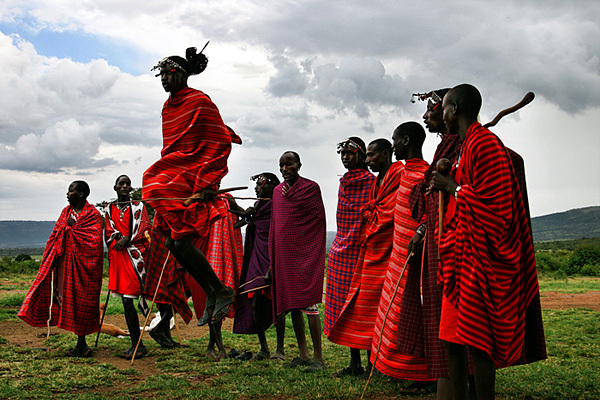
As night falls, watch the famous adumu (the jumping dance). Young warriors form a circle, their beads glimmering with a golden light. A low, rhythmic chant, deep at first like distant thunder, gradually grows stronger. One by one, the warriors step into the circle and leap into the air in jumps that seem to defy gravity. The dance is more than entertainment: it is a display of strength, grace, and warrior pride.
Coastal Swahili Culture: Where Africa Meets the Indian Ocean
The Living History of Stone Town
In Zanzibar’s Stone Town, narrow streets wind like ancient rivers between coral-stone buildings. Each heavy, carved door is unique, telling stories of wealth, status, and cultural influence:
The Language of Doors
- Indian-style doors: Diamond-shaped brass studs
- Arab-style doors: Delicate geometric carvings
- Chinese-style doors: Ceramic inlays and gold-leaf details
The air is filled with the scents of:
- Cloves drying on woven mats
- Cardamom and cinnamon from the spice markets
- Fresh bread from street vendors
- Incense drifting from hidden courtyards
Traditional Swahili Crafts
The Art of Dhow Building
On the beaches north of Stone Town, master craftsmen continue a centuries-old tradition of building dhows. With no written plans, these artisans:
- Shape massive planks using hand tools passed down through generations
- Join the planks with coconut-fiber rope and wooden pegs
- Build vessels that navigate by the stars and monsoon winds
- Treat the wood with traditional coconut oil
The Hadzabe: Guardians of Ancient Knowledge
A Day with the Last Hunter-Gatherers
Deep in the Lake Eyasi region, the Hadzabe maintain one of humanity’s oldest ways of life. Their day begins before dawn:


The Morning Hunt
- The soft whisper of testing bowstrings
- Intricate bird calls used for communication
- Traditional tracking techniques that read the subtlest signs
- Knowledge of over 200 bird species and their behavior
- Understanding of animal movement patterns passed down by word of mouth
Foraging Traditions
The women’s foraging expeditions reveal encyclopedic knowledge of:
- More than 150 edible plants
- Dozens of medicinal roots and herbs
- Seasonal fruiting patterns
- Traditional food preservation techniques
- Ancient cooking methods using heated stones
The Makonde: Masters of an Ancient Art
Woodcarving Traditions
In the southern region, Makonde masters transform African blackwood into intricate sculptures:
The Creative Process
- Selecting wood based on spiritual connection
- Traditional tools passed down through generations
- Carving techniques that “release” the spirit from the wood
- Telling complex family stories through interconnected figures
- Ancient finishing methods using natural oils and pigments
Cultural Expression
Traditional Musical Heritage
Instrumental Traditions
- Marimba: A complex wooden xylophone that plays haunting melodies
- Zeze: A two-string instrument that plays stirring melodies
- Ngoma drums: Available in various sizes, used for different ceremonial purposes
- Kudu horn: Used for long-distance communication
- Kayamba rattle: Made from reeds and filled with seeds
Vocal Traditions
- Call-and-response patterns
- Complex harmonies passed down by ear
- Storytelling through song
- Ceremonial chants
- Work songs for different activities
The Art of Traditional Healing
Traditional Healers
Local healers hold knowledge of:
- Hundreds of medicinal plants
- Traditional diagnostic techniques
- Spiritual healing rituals
- Seasonal gathering patterns
- Ancient preparation methods